Finding Legal Representation After a Denver Bike or Pedestrian Accident

When a car hits someone on a bike or on foot, there is nothing between the person and the vehicle. The injuries are often serious, and the questions that follow are specific: who had the right of way, was the door opened safely, what did the driver see? The right lawyer is one who knows how to answer those questions with evidence.

Chalat Law is a Denver personal injury firm representing people hurt in catastrophic accidents and by someone else’s negligence. This is not a ranked list of lawyers. It is a practical way to assess any attorney you are considering after a bicycle or pedestrian crash.

Bicycle crashes and dooring incidents

Directory listings often describe a firm as offering legal services for cases involving accidents and injuries. That wording is a description of what a firm accepts, not evidence of its experience with bicycle crashes. Look for specifics instead. Our own bicycle accident practice starts with the rules below, because they frame almost every bike claim in Colorado.

What Colorado law says about cyclists and car doors

Under C.R.S. 42-4-1412, a person riding a bicycle in Colorado has the same rights and duties as the driver of any other vehicle, with some specific exceptions. That means a cyclist in a lane or bike lane is lawful traffic.

Dooring has its own statute. C.R.S. 42-4-1207 prohibits opening a vehicle door on the side available to moving traffic unless it is reasonably safe and can be done without interfering with other traffic, and it prohibits leaving a door open on that side longer than needed to load or unload passengers. A violation is a class B traffic infraction. Whether a violation supports a civil injury claim, and how fault is shared, depends on the facts of each crash.

Questions to ask a lawyer about a bike crash

  • How many bicycle cases have you handled personally, and were any dooring crashes?
  • In a dooring case, how would you identify who opened the door, whether a driver or a passenger, and which insurance policy applies?
  • What evidence would you collect, such as video from nearby businesses, rideshare trip records if a passenger was involved, and damage to the bike?
  • How would you respond if the insurer argues I was riding too close to parked cars or outside the bike lane?
  • How would you account for my injuries, gear, and bike, and what do you need from me?

Fault arguments matter in bike cases. Under Colorado’s modified comparative negligence rule, any share of fault assigned to the rider reduces recovery, and a finding of 50 percent or more bars it. A lawyer should be able to explain how they would address that risk in your case.

Pedestrian accident representation

Pedestrian claims usually come down to right of way and attention. Firms often describe their clients as personal injury victims who have suffered injuries as a result of another person’s negligence. That is accurate, but it applies to every injury firm. What you need to know is how a specific lawyer would prove negligence in your crash. In our pedestrian accident cases, that work begins with the right-of-way rules.

What Colorado law says about pedestrian right of way

Under C.R.S. 42-4-802, when traffic signals are not in place or not working, drivers must yield to a pedestrian crossing in a crosswalk, slowing or stopping as needed. The same statute says pedestrians may not suddenly leave a curb into the path of a vehicle that is too close to stop. Under C.R.S. 42-4-803, a pedestrian crossing outside a marked crosswalk or an unmarked crosswalk at an intersection must yield to vehicles. These rules often decide how fault is divided.

Questions to ask a lawyer about a pedestrian claim

  • How would you establish where I was crossing and what the signals showed at the time?
  • What evidence would you request quickly, such as intersection cameras, signal timing data, and the driver’s phone records?
  • If the driver says I crossed outside a crosswalk, how would that affect my claim, and how would you respond?
  • Who will be my main contact, and how often will I get updates while I am still in treatment?
  • What are your fee terms, and how are case costs handled?

Claims arising from the use or operation of a motor vehicle in Colorado generally must be filed within three years, but evidence such as video is often lost within days. If you were hurt on a bike or on foot because of someone else’s negligence, we are glad to review what happened and give you a straight assessment. Schedule a free consultation with our team.


How to Choose a Wrongful Death Lawyer in Denver

Families usually start looking for a wrongful death lawyer at the worst possible time. Grief, funeral arrangements, and calls from insurers all arrive at once, and a list of top-rated firms does little to tell you who will handle your family’s case with care. What helps is knowing what to verify and which questions to ask.

At Chalat Law, we represent Denver families in wrongful death claims arising from catastrophic accidents. We believe families should be able to judge any lawyer, including us, on clear answers and verifiable details rather than rankings.

Evaluating wrongful death lawyers

Colorado wrongful death claims follow their own rules. The Wrongful Death Act sets an order for who may bring a claim, with the surviving spouse holding the primary right in the first year after the death and other family members able to file in specific circumstances. Most claims must be filed within two years of the date of death, and the deadline is longer in limited cases, such as a vehicular homicide where the driver left the scene. A useful overview from Nolo explains the basics. Any lawyer you consider should be able to walk you through how these rules apply to your family.

A comparison checklist

Use the same checklist for every lawyer you speak with, and verify each answer directly with the lawyer rather than relying on a website or directory profile.

  • Relevant case experience. How many wrongful death claims has the lawyer handled personally, what caused the deaths in those cases, and how recently?
  • Who would handle the matter? Will the attorney you meet lead the case, and who else on the team will be involved?
  • Communication. How often will the family receive updates, and how are questions from multiple family members handled?
  • Strategy. What does the lawyer see as the key questions in the case, and what would they do first?
  • Fee terms. What is the fee arrangement, how are case costs handled, and is everything provided in writing before the family signs?

Questions that show whether a lawyer fits your family

  • Who in our family is able to bring this claim, and does the timing affect that?
  • How will you explain decisions to us, and which decisions will be ours to make?
  • How do you handle disagreements among family members about the case?
  • What would a realistic timeline look like, and what could slow it down?

Rankings, awards, and testimonials can be a starting point, but they are not proof of how a lawyer will handle your family’s case. The answers to these questions are.

Choosing counsel after a fatal car crash

A fatal crash adds layers to a wrongful death claim. There may be a criminal investigation running alongside the civil case, several insurance policies involved, and evidence that needs to be preserved quickly. Many of the families we work with come to us after fatal motor vehicle crashes, and we focus on making each step of the process clear to them. No lawyer can promise a particular outcome, and families should be cautious of anyone who does.

Questions to ask in a consultation

  • Fatal-crash experience. Have you handled wrongful death claims arising from car crashes, and what types of crashes were they?
  • Approach to the case. How would you investigate this crash, and how would you coordinate with any criminal case against the driver?
  • Insurance. How would you identify every policy that might apply, including the at-fault driver’s and any others?
  • Main contact. Who will be our main point of contact, and how do we reach them?
  • Updates. How often will we hear from you, and how will you tell us about important developments?

Ask which records to gather

Families often want to start collecting documents right away. That instinct is good, but the records that matter depend on the crash, the people involved, and the claims being brought. Rather than working from a generic list, ask the lawyer which records and information they need from you, which ones they will request themselves, and whether anything should be preserved immediately.

If you lost someone in a crash caused by another person’s negligence, we are here to answer your family’s questions and explain your options at your pace. Reach out to our office when your family is ready to talk.

How to Choose a Personal Injury Lawyer in Denver

Search for the best personal injury lawyer in Denver and you get ranked lists, star ratings, and the names from the billboards on I-25. None of that tells you whether a firm is the right fit for your injury. The better question is which lawyer has handled cases like yours, will explain your options plainly, and will actually be the one working on your file.

At Chalat Law, we are Denver personal injury lawyers who focus on catastrophic accidents and claims built on someone else’s negligence. We talk with injured people and their families every week, and the ones who get the most out of a first conversation are the ones who know what to compare before they call.

Choosing a Denver personal injury lawyer

Personal injury lawyers in Denver handle everything from minor fender benders to injuries that change a person’s life. Our practice is built around the serious end of that range, where the injuries, the evidence, and the stakes are significant. Whichever firm you contact, the same comparison points apply.

  • Relevant experience. Ask how many cases like yours the firm has handled and how recently. A practice built on high-volume, quick-settlement claims runs differently from one that prepares serious injury cases as if they will go to trial.
  • Who handles your case. Ask whether the attorney you meet will be the one working on it day to day, or whether it moves to a case manager after you sign.
  • Communication. Ask how often you will get updates, who they will come from, and how quickly calls and emails are usually returned.
  • Fee terms. Ask for the fee agreement in writing before you sign. Look at the percentage, whether it changes if the case goes to trial, and how case costs such as expert fees and records requests are handled.
  • Case strategy. Ask what the lawyer sees as the strengths and weak spots in your claim, and what the next 60 to 90 days would look like.

Pay attention to the quality of the initial evaluation itself. A useful first conversation should leave you with a clearer picture of your claim, including the deadline that applies. In Colorado, most personal injury claims must be filed within two years, while claims arising from the use or operation of a motor vehicle generally have three years. A lawyer who raises timing without being asked is a good sign.

Compare firms side by side

Roundup sites like to line up Denver firms side by side, and that is a sound method when you are the one doing the comparing. Write down the same questions for every lawyer you talk to, take notes during each conversation, and lay the answers next to each other afterward. You are not looking for the single best lawyer in Denver. You are looking for the lawyer whose experience and approach fit your claim.

Evaluating results and firm visibility

Large verdict numbers and television ads are the most visible things about many firms. Neither one, on its own, tells you how a firm will handle your case. We would rather you judge us, and every other firm, by whether the experience behind those numbers lines up with what happened to you.

Before you treat a reported verdict or settlement as relevant, check what sits behind it:

  • What type of case it was, and whether the injuries and liability questions resemble yours
  • Whether it was a jury verdict or a negotiated settlement, and whether a verdict was later reduced on appeal
  • How long ago it happened, and whether the attorneys who handled it are still at the firm
  • Whether the figure is the gross amount before fees, costs, and medical liens
  • What insurance or assets were available, since available coverage often caps what any case can recover

Colorado law also shapes outcomes in ways a headline number will not show. Under the state’s modified comparative negligence rule, an injured person’s recovery is reduced by their share of fault and is barred entirely at 50 percent or more. Two cases with similar injuries can resolve very differently because of how fault is assigned.

Visibility is not the same as results

Roundups that line firms up side by side tend to sort by what is easy to count: review totals, advertising reach, and how often a name appears online. That is a reasonable way to build a shortlist. It is not proof of results. If you are looking for Denver personal injury firms outside the big television advertisers, skip the reach metrics and compare relevant experience, communication, and strategy. Ask each lawyer to describe a case similar to yours, what made it difficult, and how they approached it.

Matching legal experience to the injury

Personal injury law covers a wide range of claims, and directory listings often group them together. A typical description lists car accidents, brain injuries, and “premises liability, and other personal injury claims” in a single line. Groupings like that tell you what a firm will accept, not what it handles most often. Our work centers on catastrophic accidents and negligence, and we encourage every reader to match any lawyer’s experience to the facts, injuries, evidence, and liability issues in their own claim.

Slip and fall and premises liability claims

When we take on premises liability claims, the starting point is the law itself. Injuries on someone else’s property in Colorado are governed by the Colorado Premises Liability Act. Under the Act, what a property owner owes you depends on whether you were an invitee, a licensee, or a trespasser when you were hurt. That classification can decide a case, so ask any lawyer you speak with:

  • How they would establish your status on the property and why it matters for your claim
  • Who owned, leased, or controlled the property, and whether more than one party may share responsibility
  • What evidence they would request right away, such as surveillance video, maintenance logs, and incident reports, before it is overwritten or discarded

Dog bite claims

In the dog bite cases we see, the key law is Colorado’s dog bite statute which allows a strict liability claim against a dog’s owner when a bite causes serious bodily injury or death to someone lawfully on public or private property. Bites that fall outside that definition may still support a negligence claim, but the rules and available damages differ. Ask a prospective lawyer:

  • Whether your injuries are likely to meet the statute’s definition of serious bodily injury
  • Who owned the dog, and whether a landlord or another party may also be involved
  • Which records they need, such as the animal control report, medical records, and photos of the injury as it healed

If your injury came from a catastrophic accident or another party’s negligence, we are glad to talk through what happened and whether our experience fits your claim. Request a free consultation to get started.

How to Choose a Denver Car Accident Lawyer

After a crash, the calls start quickly. The other driver’s insurer wants a recorded statement, your own insurer has forms, and the ads all promise the same thing. Picking a lawyer from that noise is easier when you know which questions separate a good fit from a familiar name.

Motor vehicle collision litigation is at the core of our practice at Chalat Law. We represent people in Denver after serious crashes caused by someone else’s negligence, and the questions below are the same ones we would want a family member to ask any firm, including ours.

Choosing a Denver car accident lawyer

When you compare Denver car accident attorneys, you will notice firm descriptions often say they handle “high-stakes motor vehicle accident, wrongful death, and catastrophic injury litigation across Colorado.” Treat language like that as a starting point for questions, not a ranking. What matters is whether a lawyer’s collision experience lines up with your crash and your injuries.

Questions to ask in your first conversation

  • Similar cases. Have you handled crashes like mine, for example a rear-end collision on the highway, a left-turn crash at an intersection, or a crash involving a commercial vehicle? What happened in those cases?
  • Attorney involvement. Will you personally work on my case, or will it be handled mostly by staff? Who will appear at depositions and in court?
  • Communication. How often will I hear from you, and who should I call when something changes, like a new medical bill or a letter from the insurer?
  • Fees. What percentage do you charge, does it change if the case is filed in court or goes to trial, and who pays case costs if there is no recovery?
  • Next steps. What would you do in the first 30 days, and what do you need from me?

Checking whether a consultation has a fee

Many searches for top-rated Denver auto accident lawyers include the words “free consultation,” but policies vary from firm to firm. Ask directly when you call: Is there any charge for the first meeting? Does it cover a review of the police report and your insurance documents, or is it a short intake call? Getting that answer up front avoids surprises and tells you something about how openly a firm discusses money.

Low offers and uninsured or hit-and-run drivers

Some of the hardest calls we get start with an insurance problem: a quick offer that does not cover the medical bills, or a crash where the other driver has no insurance or drove away. Our collision litigation experience is directly relevant here, because these situations start a cascade of documents and deadlines that are easy to miss before a lawyer reviews them.

When the other driver’s insurer offers too little

Say you were rear-ended on I-25 and the other driver’s insurer sends an offer within a few weeks. Before you respond, have a lawyer review it and ask:

  • What exactly does the offer cover, and what does accepting it release?
  • Are my documented losses complete yet, including future treatment, missed work, and out-of-pocket costs?
  • Is my treatment finished, or is it too early to know the full cost of the injury?
  • What policy limits apply to the at-fault driver, and are there other policies that could be relevant?

When the driver was uninsured or left the scene

After a hit-and-run or a crash with an uninsured driver, do not assume what coverage you do or do not have. Bring your own auto policy to a lawyer and ask them to review it with you. Useful questions include:

  • Which parts of my own policy might apply, and what notice does the policy require from me?
  • Is the police report complete, and does it include a report number, witness names, and a description of the other vehicle?
  • What evidence should be requested now, such as traffic or business camera footage, before it is recorded over?

These are also good moments to ask about serious collision experience specifically. A lawyer who regularly handles disputed coverage and significant injuries will usually have a clear answer about what they would request first and why.

When an injury warrants legal help

Not every crash needs a lawyer. Plenty of minor accidents with no injuries are settled directly with insurers. The harder cases are the ones that seem minor at first. If you are unsure whether your situation calls for legal advice, the details below are what we, or any lawyer, would want to know.

Document everything, even after a minor crash

  • Symptoms. Write down when pain, stiffness, headaches, or other symptoms started and how they change day to day.
  • Treatment. Keep records of every visit, prescription, and referral, including physical therapy and imaging.
  • Crash details. Save photos of the vehicles and the scene, the police report number, and contact information for witnesses.
  • Insurance contact. Keep a log of every call and letter from any insurer, including dates and names, and be cautious about giving a recorded statement before you have advice.

Colorado generally allows three years to file a claim arising from a motor vehicle crash. That can feel like a long time, but evidence fades and records get harder to collect, so early documentation matters regardless of what you decide.

Whiplash and neck injuries

Whiplash is commonly caused by rear-end crashes, and according to Mayo Clinic, symptoms usually develop within days of the injury rather than at the scene. They can include neck pain and stiffness, reduced range of motion, and headaches that start at the base of the skull. If you have any of these after a crash, see a medical provider first. A prompt evaluation protects your health and creates a record of the injury.

Once you have medical guidance, it is reasonable to ask a lawyer whether the circumstances merit legal advice. Whether a whiplash claim is worth pursuing depends on the severity of the injury, how long symptoms last, the treatment involved, and how fault is assigned. Under Colorado’s comparative negligence rule, a share of fault assigned to you reduces any recovery.

If you suffered injuries as a result of another person’s negligence, the details of your crash are worth a conversation. Our consultations are free and come with no obligation. Contact our team to review what happened, and we will tell you plainly whether we think a claim makes sense.

Choosing Counsel After a Denver Motorcycle or Semi-Truck Crash

Motorcycle and semi-truck crashes sit at opposite ends of the vehicle size spectrum, but they share something important. The injuries tend to be severe, the facts are often disputed, and the evidence that answers the hardest questions can disappear quickly. Choosing the right lawyer comes down to who will investigate those facts carefully and keep you informed while they do.

At Chalat Law, we represent people in Denver after catastrophic accidents and negligence, and motor vehicle collision litigation is central to that work. We take a transparent approach: we tell clients what we see in their case, what we do not know yet, and what we plan to do about it.

Motorcycle accident representation

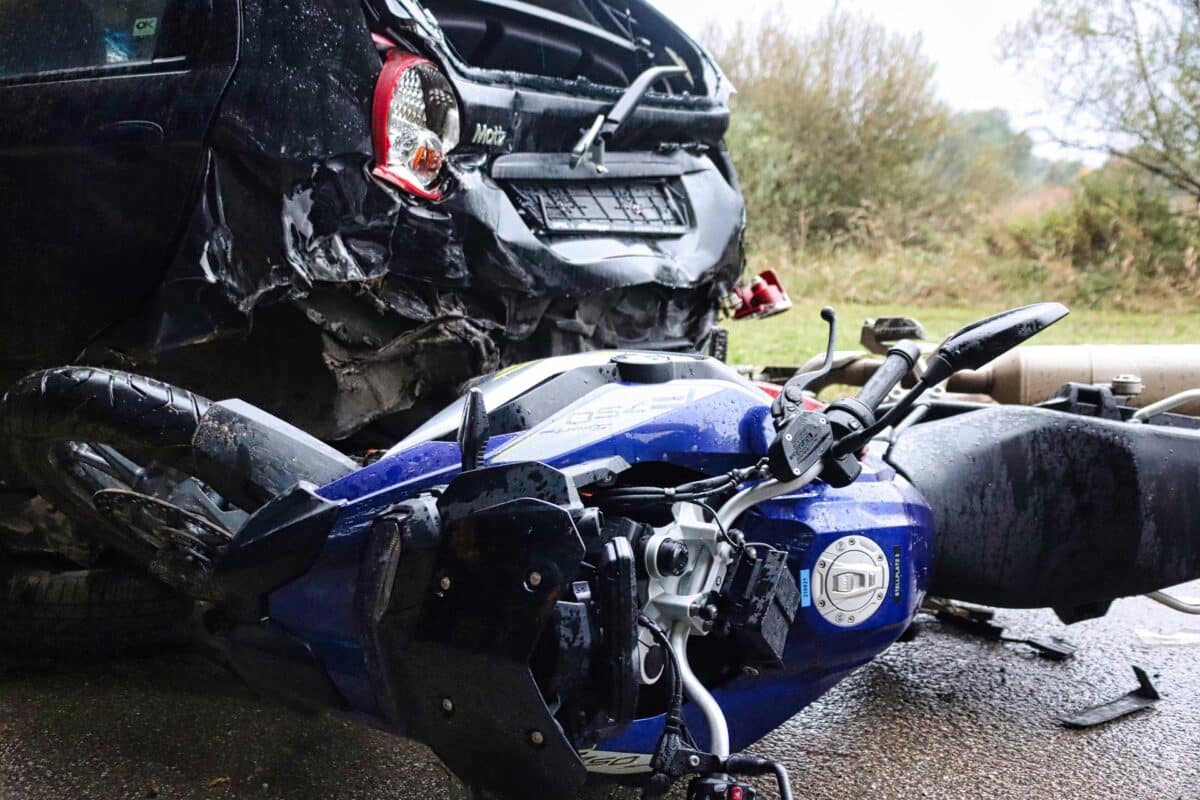
Our firm handles motorcycle accident cases as part of our collision practice, and riders often come to us after crashes where fault is disputed from the first day.

There is no objective list of the best motorcycle accident lawyers in Denver. There are lawyers whose collision experience, communication, and approach fit a particular rider’s case. These are the criteria worth comparing:

  • Relevant collision experience. Ask how many motorcycle cases the lawyer has handled personally, what types of crashes they involved, and how recent they were.
  • Communication. Ask who your main contact will be and how often you will hear from them, especially during long stretches of medical treatment.
  • Case strategy. Ask what the lawyer sees as the biggest dispute in your case and how they would address it.
  • Fee terms. Ask for the fee agreement in writing, including how case costs such as accident reconstruction are paid.

When the driver says they did not see you

“I didn’t see the motorcycle” is one of the most common things drivers say after a crash, especially in left-turn collisions. It is a statement, not a defense that settles the case, and it often becomes the central question in the investigation. Insurers may also try to shift blame to the rider, which matters because Colorado’s comparative negligence rule reduces recovery by the injured person’s share of fault and bars it at 50 percent or more.

Ask any lawyer you consider how they would investigate that claim:

  • What evidence would you request first, such as traffic cameras, nearby business video, dashcam footage, or the other driver’s phone records?
  • Would you examine sight lines, lighting, and road conditions at the scene, and would you bring in an accident reconstruction expert?
  • How would you respond if the insurer argues I was speeding, lane splitting, or hard to see?
  • How would you handle damage to my bike and gear as evidence?

A lawyer who answers with specific investigative steps, rather than general reassurance, is telling you how they actually work.

Semi-truck accident representation

We represent people injured in semi-truck and commercial truck accidents, where the size of the vehicle and the number of companies involved change how a case has to be built.

A crash with a semi involves more parties and more records than a typical car accident. The driver, the trucking company, the owner of the trailer, a cargo loader, and a maintenance contractor may all be relevant, and each may have its own insurer and attorneys. Our motor vehicle collision litigation background shapes how we approach these cases, and the same criteria from the motorcycle section apply: relevant collision experience, clear communication, a defined strategy, and written fee terms.

Questions to ask about investigating a truck crash

  • How soon would you send preservation requests to the trucking company, and what records would they cover?
  • Would you request the driver’s logs and electronic logging data to check compliance with federal hours-of-service rules?
  • Would you look at maintenance and inspection records for the truck and trailer, and at the company’s hiring and training files for the driver?
  • Who else besides the driver might share responsibility, and how would you identify every insurance policy involved?
  • Would you work with reconstruction or trucking industry experts, and how are those costs handled?

Questions to ask about communication

  • Truck cases can take longer than car cases. How will you keep me updated during slow periods?
  • Who do I call if the trucking company’s insurer contacts me directly?
  • What decisions will you bring to me, and which will you make on your own?

Colorado generally allows three years to file a claim arising from a motor vehicle crash, but evidence in truck cases can be lost long before that. If you were hurt in a motorcycle or semi-truck crash, we are glad to talk through what happened and how we would approach it in a free consultation.