$2 Million: Denver Pedestrian Accident

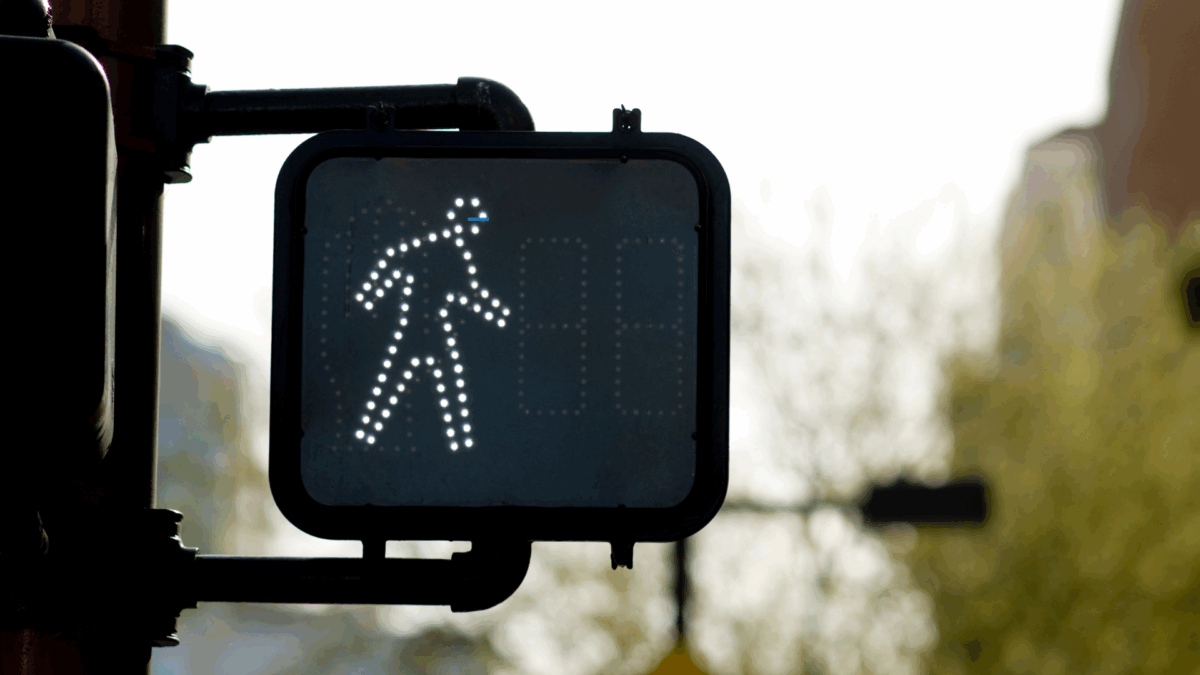
A pedestrian hit in a Denver crosswalk by a construction company employee recovered $2 million, settled without filing a lawsuit.

A pedestrian hit in a Denver crosswalk by a construction company employee recovered $2 million, settled without filing a lawsuit.
A family hit head-on by a wrong-way truck on a Tower Road overpass, leaving the mother with a broken back, recovered $389,500.
The pages of fine print that skiers and snowboarders must agree to when hitting the slopes in Colorado — waivers of liability — do not protect ski resorts when resorts violate state laws or regulations, the Colorado Supreme Court ruled Monday.
The ruling, handed down in the case of a 16-year-old girl who fell from a ski lift at Crested Butte Mountain Resort and was paralyzed two years ago, likely ends a years-long push by the ski industry to use waivers to shield resorts against almost all lawsuits, even in cases where ski areas violated state law, experts said.
“It’s a sea change, in terms of ski areas’ responsibilities and consumers’ ability to be protected from ski areas’ negligence,” said Evan Banker, a personal injury attorney at Denver firm Chalat Hatten & Banker. “…From a consumer protection standpoint, it’s huge. Because liability breeds responsibility.”
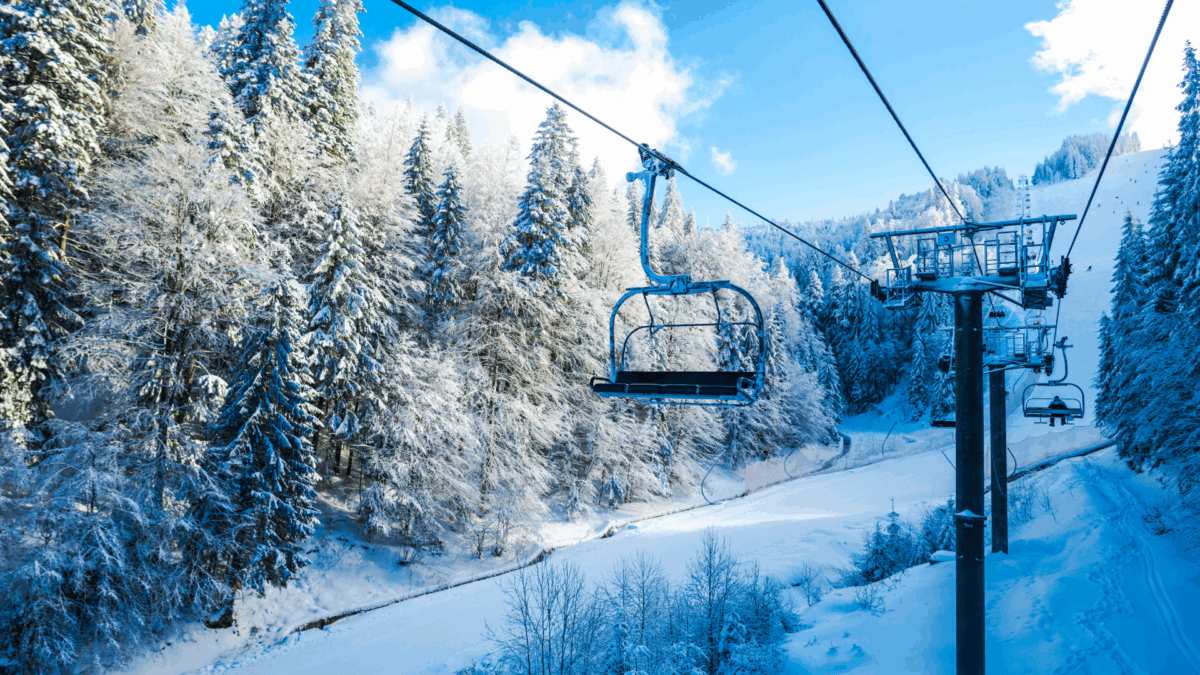
In their 5-2 decision, the Colorado Supreme Court justices considered a lawsuit brought by Annie Miller and her father, Michael Miller, over Annie’s 30-foot fall from a lift at Crested Butte, which is owned by Vail Resorts. The father and daughter from Oklahoma boarded the Paradise Express chairlift, a four-seat, high-speed lift at the resort, on March 16, 2022.
Annie couldn’t get properly seated, and grabbed the chairlift to keep from falling. Her father and others began to yell for the lift to be stopped as she was dragged forward, but the lift continued with Annie hanging from the chair and her father trying to pull her back to safety.
Eventually, Annie fell and landed on her back. Even then, the lift did not stop, and Michael Miller was forced to ride to the top and ski down to his daughter, who suffered severe injuries and was paralyzed after the fall.
Michael Miller brought a negligence lawsuit against Crested Butte, arguing that the resort employees should have stopped the lift well before Annie fell and that failing to do so violated Colorado’s Ski Safety Act and the Passenger Tramway Safety Act. A lower court ruled much of Miller’s claim was invalid, and he appealed to the Colorado Supreme Court.
Monday’s ruling partially reversed the lower-court decision and allows Miller to continue to pursue the negligence lawsuit against the resort.
Sara Huey, a spokeswoman for Vail Resorts, declined to comment on the ruling because the Millers’ lawsuit is ongoing. In court filings, attorneys for Vail Resorts argued that the lawsuit misstated the precedent in Colorado around private liability waivers, which skiers and snowboarders must agree to when buying lift tickets and passes.
“Colorado courts have upheld private recreational waiver agreements, even where the plaintiff could have (or did) point to a statute regulating the activity,” attorney Michael Hofmann wrote. “The existence of recreational safety regulation has never been enough to prohibit private parties from agreeing that a waiver defense will be available.”
More broadly, the state high court’s decision likely ends efforts by the ski industry to expand the protections that waivers of liability give ski areas.
“This was a big victory for ski safety in Colorado,” said Bruce Braley, who represented the Millers. “It says unequivocally that ski areas cannot force skiers and snowboarders to sign away their rights to protection under the statutes and regulations that govern the ski industry in Colorado.”
The ruling turns back the clock on liability in some Colorado ski accident cases, Banker said.
“For many, many years… everyone sort of agreed that when you sign that waiver you are waiving claims of negligence, but you can always still make claims if the ski area fails to do the things it is required to by law, like maintaining the lift properly,” Banker said.
But since about 2017, the ski industry has been successfully challenging that understanding through targeted litigation, winning key court cases that strengthened the protection afforded by waivers and pushing to essentially provide complete immunity for anything that could happen at a ski resort unless there was gross negligence, Banker and Braley said.
“So what this has done is change that,” Banker said. “It brings us back to the landscape everyone understood it to be many years ago. Which is, you can waive claims of negligence, but the ski area doesn’t get to avoid its legal responsibility, its responsibility in statute and regulations, by having you sign a waiver.”
Adrienne Saia Isaac, a spokeswoman for the National Ski Areas Association, a Lakewood nonprofit that represents more than 300 sk- area members, said it is “too early to tell how the ruling will affect the Colorado ski industry.”
The association argued in court filings both that the lift operator at Crested Butte was not required to stop the lift in response to Annie Miller’s mishap, and that liability waivers do not allow ski areas to get around statutory regulations.
“While chairlift accidents within the reasonable control of ski area operators will never be eliminated, they are rare,” wrote Brian Birenbach, an attorney in Breckenridge representing the National Ski Areas Association. “This will not change by the continued enforcement of liability waivers in the courts.”
Source: SHELLY BRADBURY | sbradbury@denverpost.com | The Denver Post
Article: Liability waivers don’t shield Colorado ski resorts that violate law (denverpost.com)
An insulation installer whose knee was torn in an unprovoked bulldog bite won a $228,000 jury verdict, later settled for $301,000.
A skier who fractured his hip when t-boned at Steamboat won a $435,000 verdict in the first U.S. skier-collision trial since the Gwyneth Paltrow case.
Winter driving conditions are dangerous. According to the National Highway Traffic Administration, 17% of all injury and death traffic accidents occur during winter driving conditions. It is important to learn how to drive safely in winter conditions.
Snow, ice, sleet, obscured vision, difficult stopping and turning conditions can make for a challenge for motorists. Here are some tips from Chalat Hatten & Banker to help you drive more safely in the winter months.
Prepare
Have the shop test your battery. Replace it if its failing. Before you drive in winter conditions do a walk around the car. Check your headlights, both low and hi-beams. Check your turn signals, brake lights, 4-ways and interior lights. Newer cars have “Daytime running lights,” or DRL’s. These are essentially full-time low beam illuminations which make it easier to be seen even during daytime hours. Pack an emergency bag with warm clothes, gloves and hats, a flashlight, and some water and snack foods so you can get by if you are stuck in traffic or stuck in a snowbank. Make sure you have all the essentials in your car in case you get stuck. A snow shovel and a bag of salt/kitty litter can assist you to dig your wheels out of a ditch and give them traction on the snow/ice. Keep a blanket and bottles of water in your car in case you get stuck and are waiting for help. Other things to have in your car include jumper cables, flashlights, spare tire, window washer fluid and a snow scraper, spare clothes, tow rope and flares.
What conditions are your tires in? We at the firm usually switch to snow tires at Halloween and go back to road tires on Memorial Day. This is expensive, but its less expensive than an accident. Make sure your tires are in good condition – this is an important part of the “walk around,” look for worn treads, make sure one tire isn’t flatter than the other 3. Consider checking your spare situation. Some modern cars don’t come with spares or come with small emergency tires only. Be mentally prepared to change a tire. Figure out how to get to the spare, the jack and the tire iron/lug wrench, and how to change the tire on your own.
Check your wiper blades both front and if you’re in a station wagon or SUV, the wiper for the back window. Making sure your windshield wipers and defrosters are working is vital to staying safe while driving in the snow. Right maintained windshield wipers are a necessity; there are also extra blades available that are better fitted to help clear snow from your window shield.
Check your window washer fluid. This is easy, it’s the plastic container just under the hood.
If you are in an EV, make sure you’re charged up before winter driving. The battery load on your EV is much higher in cold weather, and you’ll see a decrease in range and remaining time if you are not topped off for a charge.
In gasoline or hybrid cars, the same holds true. You will see a decrease in MPG because of stop and go traffic, a high load on the engine and battery, and lost traction. Fill it up before you start your journey.
Decrease Your Speed While Driving
According to the U.S. Department of Transportation, 24% of annual weather-related auto crashes occur on snowy, icy, or slushy roads. And more than 1,300 people are killed on icy or snowy road conditions annually. The most significant thing to do when driving on slippery roads is to slow down. Stopping on slippery roads may take 2 to 10 times longer to stop compared to stopping on a dry road. Be sure to increase your following distance of another vehicle to 8 – 10 seconds.
Don’t Not Use Cruise Control
You should never use cruise control when driving in winter conditions. You want to be able to have manual control over your vehicle, having cruise control on reduces the driver’s reaction time if you happen to hit a patch of ice and can make it more likely to get in an accident.
Be Mindful of Snowplows
Snowplows have the absolute right of way. Stay back, don’t pass unless there is clearly an open lane on the snowplow’s left. Don’t tailgate a snowplow. Plows drop de-icer and sand to treat Colorado highways during a snowstorm. Drivers who follow too close risk damage to their vehicle from the de-icer and sand. Snowplows can also stop abruptly. Motorists should leave plenty of room (at least 3-4 car lengths from a plow) to avoid a potentially serious collision. never pass a snowplow on the right. Snowplows are designed to push the snow, slush, and other damaging debris like rocks to the right of a roadway. Attempting to pass a plow on the right could not only damage a vehicle but also obstruct visibility.
THE DENVER CAR ACCIDENT LAWYERS AT CHALAT HATTEN & BANKER
For more than three decades, the attorneys at Chalat Hatten & Banker PC have helped individuals and their families obtain justice and compensation after a car accident. If you’ve been injured in a car, truck, pedestrian, bus, or motorcycle accident, please call the car accident attorneys at Chalat Hatten & Banker at 720-809-7382 or send us an email below for a free, no-obligation evaluation of your case. We serve clients around the state of Colorado, including Denver, Fort Collins, Boulder, Aurora, Littleton, Colorado Springs, and Pueblo.
On June 3, 2024, Governor Jared Polis signed into law House Bill 24-1472. The new law increases money damage limits for certain tort actions in Colorado. Here’s what you need to know.
History and current law on the caps on damages in Colorado
The term “civil action” means lawsuits for money damages. “Civil actions” for personal injuries are rights or claims based upon by an individual’s physical injury caused by someone else’s wrongdoing. Damages for civil actions for personal injuries fall into two categories: “economic,” or “non-economic.” Economic damages stem from money spent as a result of the harm, including health care expenses and lost income. Non-economic damages are damages for physical pain, suffering, and emotional distress.
Existing laws setting caps on damages were put onto the books in the 1980’s. As to medical malpractice, the limit was last adjusted in 2005, from $250,000 to $300,000. That limit hasn’t been adjusted since then; and as of June 2024, the limit on noneconomic damages, including wrongful death, for medical malpractice, remains at $300,000.
As to general personal injury claims such as slip and fall, car and truck accidents, the presumptive limit on noneconomic damages was set in 1986 at $250,000. However, the 1986 statute set up an exception to the presumptive cap which could be exceeded when “the court finds justification by clear and convincing evidence therefor” up to an absolute enhanced cap of $500,000. In 2007 the legislature enacted a new law intended to restore the damages limitations to the dollar value as to when they were enacted and thus to reflect the effects of inflation. The statute was re-written to provide for cumulative annual adjustments for inflation for each year based upon the consumer price index. As of June, 2024 the presumptive limit for noneconomic damages as adjusted for inflation is set at $729,790. But still the damages may be increased by the court upon clear and convincing evidence up to an enhanced cap – for a maximum of $1,459,600. These values reflect caps of $250,000/$500,000 adjusted by inflation from the base rate of 1998 to present. This means that what you could buy in 1998 for $250,000 would cost $729,790 today – this is the distressing truth as to how the General Assembly monetizes money damages in personal injury cases.
In 1989 noneconomic losses due to the wrongful death of a family member were defined as “grief, loss of companionship, pain and suffering, and emotional stress, to the surviving parties who may be entitled to sue.” The noneconomic loss maximum was limited to the same value as noneconomic loss for personal injury cases — $250,000. A few years after the personal damages limitation was tied to the consumer price index, the legislature did the same for wrongful death cases. That means that as of June 2024 the wrongful death noneconomic damages cap is $679,990 reflecting just a slight lag behind noneconomic damages for personal injury cases. There are exceptions to the cap, for instance when the act causing the death is a felonious killing. We see that, for instance, in drunk driving cases.
The 2024 statutes increasing damages for noneconomic damages
Effective Date – Except for medical malpractice cases, the new laws enacted by the General Assembly in 2024, and signed into law by the Governor, are effective to civil actions filed on or after January 1, 2025. The effective date is based on the filing of the claim. The medical malpractice adjustments are only effective as of the date of the injury.
This means that cautious lawyers might advise waiting until after New Year’s Day, 2025, to file a personal injury or wrongful death case arising from negligence. But medical malpractice cases’ increase on noneconomic damages is only applies to acts or omissions occurring on or after January 1, 2025.
Let’s take a look at how the new law affects civil actions for noneconomic personal injuries.
For civil actions for personal injury damages which are filed on or after January 1, 2025, the bill increases the cap on damages for noneconomic loss for injury to $1.5 million, and starting January 1, 2028, and every 2 years thereafter, the new law adjusts the damages cap based on inflation. There does not appear to be any corollary to the existing law in which damages can be increased, or doubled to an enhanced cap when the court finds by clear and convincing evidence a basis for doubling the award. However, note that the new cap exceeds today’s enhanced cap by just $40,400. The General Assembly apparently found it to be unnecessary to allow an enhanced limitation based upon the Court’s finding by clear and convincing evidence.
Current law specifies who may sue for wrongful death. The bill adds a sibling of the deceased as a party an eligible family member who may bring a wrongful death action in certain circumstances. The bill imposes a wrongful death damages cap of $2.125 million, and starting January 1, 2028, and every 2 years thereafter, adjusts the damages cap based on inflation. The wrongful death noneconomic damages cap is the largest jump in limits – allowing almost a doubling of permissible noneconomic damages.
Beginning January 1, 2025, the bill incrementally increases the medical malpractice noneconomic damages cap to $555,000. It treats wrongful death noneconomic losses, that is for grief and loss of the survivors, to the losses defined as noneconomic injury for injury due to malpractice. These equivalencies are then adjusted upward at specified increments, from $550,000 in 2025, to $810,000 in 2026, to $1,065,000 in 2027, and so on until 2029 when it reaches $1,575,000 for both a wrongfully injured patient’s noneconomic damages and the equivalent for the survivors’ grief and sadness for a medical malpractice wrongful death. Effective 2030, the caps are adjusted biennially for inflation, or until the General Assembly enacts some future legislation and tinkers again with these statutory limitations on the judgments of jurors.
Uncertainties
Certain industries have special caps. For instance, caps on damages in ski cases are not expressly included or excluded.
Caps on damages in cases involving a public entity are, as of June 2024, $424,000 for any injury to one person in any single occurrence and $1,195,000 for any injury to two or more persons in any single occurrence, although no one person may collect more than the limit of $424,000.
–Jim Chalat, June 11, 2024
CHB mentioned in the Colorado Sun:
April 9th, 2024, Analyzing injuries, crashes and hit-and-runs at Colorado ski areas, By Jason Blevins, Colorado Sun (modified for brevity)
Ura Kim was skiing with her husband and friends at Breckenridge in early January 2019 when she was struck by a young skier and shoved into a tree. [The young skier did not stay at the scene to give his name and address as is required by the Colorado Ski Safety Act].
The Kims called Jim Chalat, a Denver attorney who has represented injured skiers for decades. Chalat filed a lawsuit on behalf of Ura Kim, against a yet-to-be-named skier dubbed John Doe.
The lawsuit was enough to get a judge to sign a subpoena for the ski area’s pass-scanning data. Stephen Kim is a software and data engineer who has worked with statistics for more than 30 years. Kim copied the information into a database and built software to search for a young skier and a parent who fit his profile and rode the chairlift shortly after his wife was hit. Mr. Kim and Jim Chalat narrowed it down to a 12-year-old boy and his parents. Chalat hired a private investigator who called the parents, the mom replied to the investigator’s question about skiing that day at Breckenridge, saying, “My son did not hit that woman.”
The Kims settled with the family’s insurance company. After a couple years of recovery from a broken jaw and broken wrist, Ura Kim has already skied 82 days this winter. She and her husband no longer ski at Breckenridge.
When Kim called the Summit County Sheriff’s Office to file a report, he says a deputy told him “we have never caught a hit-and-run person.”
“Something has to change,” Stephen says. “It’s absolutely terrifying what is happening at some of these ski areas.”
Earlier this year the Summit County Sheriff’s Office did identify a snow biker involved in a hit-and-run that injured two skiers at Keystone. The 50-year-old man was charged with leaving the scene of a collision six days after he struck a man and his daughter, leaving them seriously injured.
Chalat says his personal injury law firm — Chalat Hatten and Banker — gets hundreds of calls a year from injured skiers.
Lately, he says, “we are seeing a significant increase in hit-and-run.”
“I find it really disturbing because the sheriff’s departments in ski counties either do not have the resources or they do not have the interest in locating these hit-and-run perpetrators,” Chalat says.
It’s back to school time. We’re sharing the road with children. They’re walking to school, riding bikes or riding in yellow school buses. Children have reduced standards of care. They are only expected to act as safely as children of the same age, education and experience. That’s the law.
Adult drivers must obey signage and roadway markings for school zones. 20 MPH is the limit. Go more slowly if the circumstances require it. Children can “dart out” in the road at any given moment.
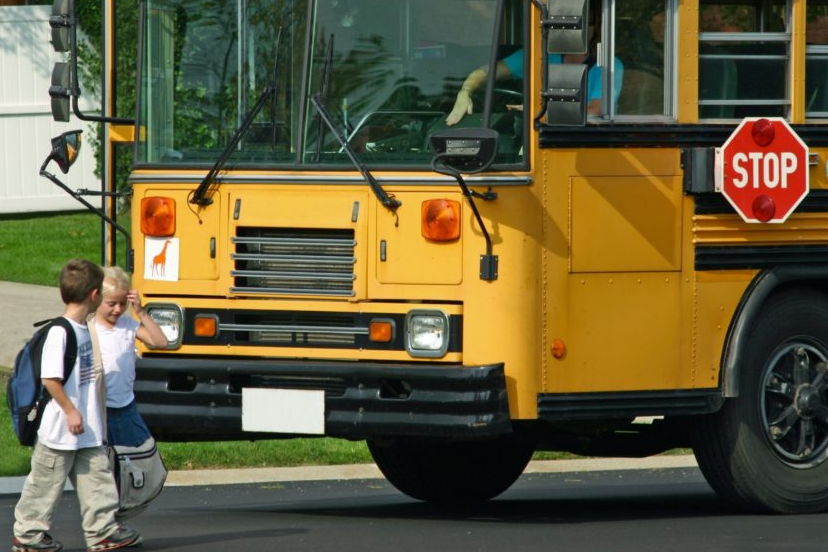
Yellow school buses have specific rights to stop, pick up children and to unload children. While stopped, school buses have special marker lights that you must obey. DO NOT pass a yellow school bus that is stopped dropping off children, it is a serious traffic violation. There are important rules and tips that we can all follow to ensure safety on the road for young commuters.
According to the National Safety Council, most of the children who lose their lives in bus related incidents are 4-7 years old and they’re walking to or from their bus. In 2020, 54 people were killed and 4,800 were injured in school-bus related crashes.
A motorist illegally passing a stopped school bus is subject to a very heavy criminal charge. Never pass a bus from either direction if it is stopped to load or unload children. Remember that the area 10 feet around a school bus is the most dangerous for children. Give children enough space to safely enter and exit the bus and always be cautious of children around you, as they are often unpredictable and tend to ignore hazards.
Bicyclists have the same rights and responsibilities as vehicles on the road, but young cyclists require extra space and attention. Be mindful that children sharing the road with motorists are not able to properly determine traffic conditions as well as an adult can. Young cyclists are more likely to turn in front of you without looking or signaling. Remember to be extra vigilant in school zones and residential neighborhoods.
If you’re dropping children off at school, please remember the following:
A skier hit from behind at Snowmass who suffered broken ribs, a collapsed lung and 25 days in the hospital recovered $675,000.