
Brake Failure and Runaway Truck Ramp Crashes in Colorado

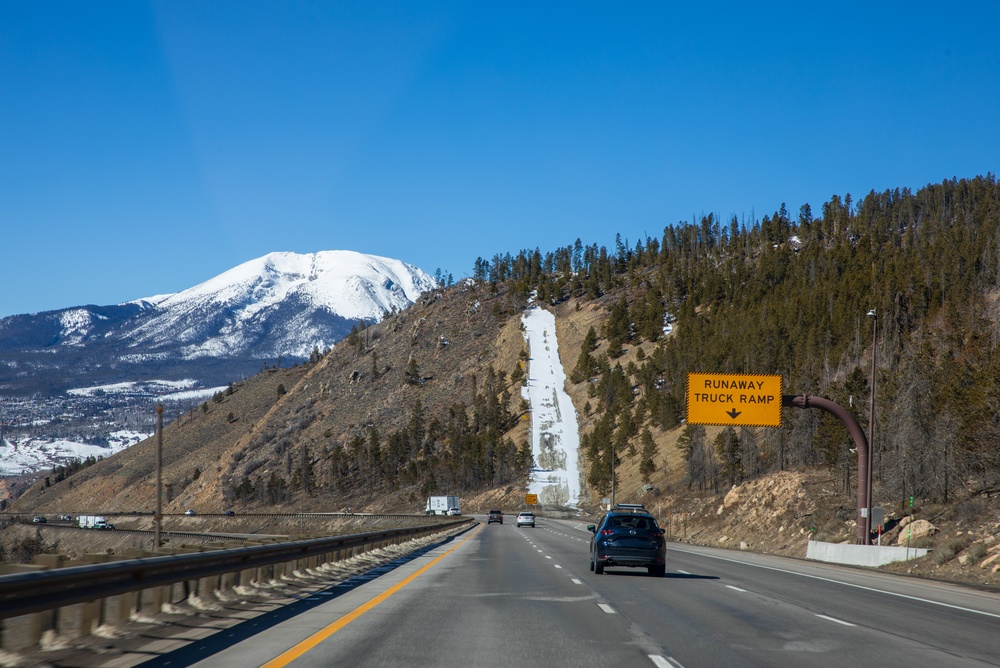
Key Takeaways
- CDOT reports that runaway truck ramps are used most frequently in summer, which points toward brake condition and driver technique rather than weather.
- The Lower Straight Creek ramp on westbound I-70 near Mile Point 212 is the most heavily used runaway truck ramp in the United States, according to CDOT.
- Heavy truck brakes fail on long descents because extensive use generates heat faster than the system can shed it. That is a predictable and preventable process, not an act of God.
- Liability usually turns on maintenance, load weight, and driver training, all of which are carrier decisions.
- Proving one of these cases requires physical inspection of the brakes, which is impossible once the truck is repaired or scrapped.
Why do truck brakes fail on Colorado descents?
Truck brakes fail on long descents because of heat. CDOT explains the mechanism directly in its Truck Safety Campaign fact sheet: long descending grades can result in high vehicle speeds, and heavy truck brakes can overheat and fail through extensive use.
The physics are unforgiving. A loaded tractor-trailer descending a sustained grade is converting an enormous amount of potential energy into heat, and the service brakes are the component absorbing it. A driver who rides the brakes instead of controlling speed with engine braking and gear selection will eventually reach a point where the brakes stop generating friction. From there, the vehicle accelerates and the driver has no meaningful way to stop it.
CDOT’s own guidance to drivers reflects this. The agency tells commercial operators not to be afraid to use brake check areas and runaway truck ramps, and its campaign message is slow, steady, and safe for the long haul.
Why does it matter that ramp use peaks in summer?
Because it removes the weather excuse from the case. CDOT reports that runaway truck ramps are used most frequently in summer.
In a personal injury claim, defense counsel routinely characterizes a mountain crash as the product of conditions nobody could control. When the state’s own transportation agency reports that the ramps see their heaviest use during dry, clear months, that framing collapses. What is left is the set of decisions a company made: how the brakes were maintained, how heavily the truck was loaded, and whether the driver was trained for the route.
CDOT also reports that Colorado has five runaway truck ramps along the I-70 Mountain Corridor, and that the Lower Straight Creek ramp on westbound I-70 near Mile Point 212 is the most heavily used runaway truck ramp not only in Colorado but in the United States. A carrier operating on that corridor cannot claim the risk was unknown.
What causes the underlying brake failure?
Several causes appear repeatedly, and they tend to point in different directions when assigning responsibility.
- Brakes out of adjustment. Air brake systems require periodic adjustment, and a system out of spec does less work per axle, which loads the remaining brakes.
- Worn linings or drums. Deferred replacement is a maintenance decision, and it shows in the records.
- Overloading. A truck carrying more weight than it should generates more heat on the same grade, which connects to the shipper and loader as potential defendants.
- Improper descent technique. Riding the service brakes rather than descending in the appropriate gear, which is a training issue.
- Component defect. A part that failed because it was defectively designed or manufactured becomes a defective products claim.
- Missed inspection findings. A defect that a pre-trip inspection should have caught, or that a maintenance contractor was hired to find and did not.
Each cause implicates a different party. Sorting them out is the work described in who is liable in a truck accident besides the driver.
Is driver inexperience part of the problem?
Colorado State Patrol data indicates that it is. In a review of runaway truck ramp usage on I-70, CSP found that 65 percent of drivers who used a truck ramp had five years or less of driving experience, and identified driver inexperience and unfamiliarity with the corridor as factors behind crashes and ramp use.
That finding is about the carrier, not the driver. A company that assigns a newly qualified driver to a Colorado mountain route without training on grade descent, gear selection, brake cooling, and ramp locations has made a choice about a documented risk. Colorado’s Mountain Rules campaign, developed by CDOT with the Colorado Motor Carriers Association and Colorado State Patrol, exists to give carriers that information, and CDOT materials describe in-cab alert systems that notify drivers of steep grades, runaway ramp locations, and brake check areas.
A carrier that had access to those tools and did not use them has to explain why. The broader corridor picture is covered in truck crashes on the I-70 mountain corridor.
How is a brake failure claim proven?
Through physical inspection of the vehicle combined with the carrier’s records, and the physical piece cannot be recreated later.
A qualified inspection can establish:
- Brake adjustment across every axle at the time of the crash
- Lining thickness, drum condition, and evidence of heat damage
- Air system integrity and leaks
- Whether the trailer brakes were contributing or the tractor was doing the work alone
- Actual axle weights against legal limits
The records fill in the rest: maintenance and repair history going back well before the crash, prior inspection reports and out-of-service orders, the driver qualification and training file, dispatch and route assignment records, and the bill of lading establishing load weight.
Engine data adds the final layer, showing speed on the descent, throttle input, and whether the driver attempted engine braking. Our guide on what truck black box and ELD data shows after a crash covers what those systems record.
Why does timing matter so much in these cases?
Because a brake failure claim depends on inspecting brakes, and a truck that has been repaired or salvaged takes the answer with it. Once new linings are installed, nobody can establish what the old ones looked like.
The paper trail runs out too. Federal regulation 49 CFR 395.8(k)(1) requires motor carriers to retain records of duty status and supporting documents for only six months from the date of receipt. Colorado allows three years to file most motor vehicle personal injury claims, which means the evidence can lawfully disappear while the filing deadline is still two and a half years away.
A written preservation demand sent to the carrier and its insurer is what holds the vehicle and the records in place. The mechanics are covered in preserving evidence after a Colorado truck crash.
What injuries do these crashes cause?
Some of the most severe injuries in the entire category, because a runaway truck is traveling faster than a truck involved in almost any other crash type and cannot slow down before impact.
Injury patterns include traumatic brain injury, spinal cord injury and paralysis, multiple orthopedic fractures, internal organ damage, crush injuries, and burns where fuel is involved. Fatal outcomes become wrongful death claims brought by surviving family members.
Because these injuries are frequently permanent, the damages analysis extends well past current medical bills into future care, home modification, and lost earning capacity. That is also why available insurance matters so much, which is covered in why truck insurance is different from car insurance.
What if the runaway vehicle was a government truck?
Public agencies operate heavy vehicles on the same grades, and a crash involving one runs under the Colorado Governmental Immunity Act rather than ordinary tort rules.
Written notice must reach the correct public entity within 182 days of discovering the injury under C.R.S. 24-10-109, and recovery is capped by statute regardless of the severity of the injury. Our article on injured by a government vehicle in Colorado covers the notice requirements and current limits.
For the full framework on commercial crash claims, see our overview of truck accident claims in Colorado.
Frequently Asked Questions
Is brake failure a defense for the trucking company?
Rarely. Brake failure on a long descent is a foreseeable consequence of extensive brake use, and the relevant questions become whether the brakes were properly maintained, whether the truck was overloaded, and whether the driver was trained for the route.
How many runaway truck ramps does Colorado have on I-70?
CDOT reports five runaway truck ramps along the I-70 Mountain Corridor. The Lower Straight Creek ramp on westbound I-70 near Mile Point 212 is the most heavily used in the United States.
Why are truck ramps used more in summer?
CDOT reports that ramp use peaks in summer because long descending grades cause brake systems to overheat through extensive use, a mechanism that does not depend on snow or ice.
Can I still bring a claim if the truck has already been repaired?
Possibly. Maintenance records, prior inspection reports, load documentation, and engine data may still be available, and law enforcement inspection findings from the scene can be significant. It is worth having the case reviewed rather than assuming it is too late.
Who inspects the truck’s brakes after a crash?
An independent expert retained for the case, typically under a protocol negotiated with the carrier so that both sides can be present and the evidence is not altered.
Talk to a Denver truck accident lawyer
Brake failure cases are won by inspecting the truck before it goes back into service. Chalat Hatten & Banker represents seriously injured people and their families throughout Colorado on a contingency fee basis, and when you call you reach a partner of the firm. Schedule a free consultation.